


The Core Difference: One Platform Still Exists
Any comparison of Omegle and Shagle has to start with a blunt fact: Omegle no longer operates. Its founder shut the service down in November 2023, citing the unsustainable burden of legal challenges related to user safety. That single data point changes the entire framing of this comparison. Rather than a live head-to-head, this is an analysis of what Omegle offered, how Shagle measures up against that legacy, and whether Shagle is worth your time as a UK user today.
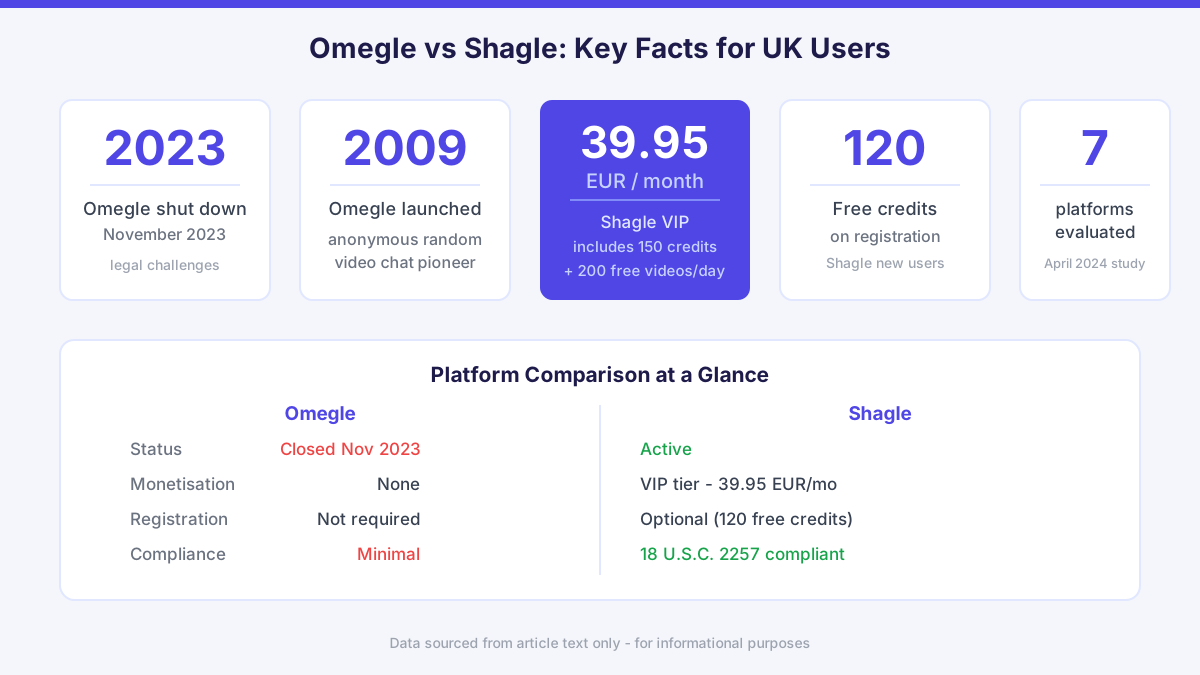
Omegle launched in 2009 and became the defining name in anonymous random video chat. At its peak, it processed millions of conversations per day. Shagle emerged later as a more structured alternative, retaining the random-connection model while adding gender and location filters, a mobile app, and a premium membership layer. The two platforms shared the same core appeal: no profile, no swiping, just an instant live connection with a stranger.
Feature Comparison: What Omegle Had vs What Shagle Offers
Omegle's original proposition was radical simplicity. You visited the site, clicked a button, and were connected to a random person anywhere in the world. There was a text mode and a video mode, plus an interest-matching option introduced in later years. Moderation, however, was a persistent weak point. Omegle relied heavily on user reports, and explicit or harmful content was a common complaint throughout its lifespan.
Shagle takes a more structured approach. The platform connects users randomly but adds gender filtering, which is available even on the free tier, and location filtering for users who want to narrow connections by country. Virtual masks and stickers give conversations a lighter, more playful character. Critically, there is a report button active during every session, and the platform states that chats are not recorded. No registration is required for basic use, which mirrors Omegle's original frictionless entry point.
Where Shagle diverges most clearly from the Omegle model is in its premium layer. As of August 2026, a VIP membership costs 39.95 EUR per month and includes 150 credits, 100 bonus DM credits per month, 200 free videos per day, unlimited access to recorded shows, a 5% discount on video purchases, and exclusive content. New users also receive 120 free credits simply for registering. Omegle had no monetisation layer at all, which contributed to the funding problems that ultimately contributed to its closure.
Safety and Moderation: Where the Platforms Diverge
Safety is the sharpest point of contrast. Omegle's moderation was widely criticised as inadequate, and legal pressure from regulators and advocacy groups citing harm to minors was central to its shutdown. The platform had no verification system and relied almost entirely on user reporting to manage misconduct.
Shagle is operated by VS Media, Inc., based in Westlake Village, California, and FBP Media s.r.o. (Reg. 06483453), registered in Prague, Czech Republic. The service is 18 U.S.C. 2257 compliant, which means it maintains records verifying that users appearing in content are of legal age. That is a concrete regulatory standard, not a marketing claim. For UK users, this is relevant context: the Online Safety Act places increasing obligations on platforms serving British users, and operators with documented compliance infrastructure are better positioned to meet those obligations than unregistered services were.
That said, Shagle is not without known issues. User reports cite bots and fake profiles, encounters with explicit content despite moderation, and privacy concerns inherent to any service that connects you with strangers by default. These complaints are consistent with what users experienced on Omegle, which suggests the random-chat model carries structural risks regardless of the operator. The practical difference is that Shagle has a functioning reporting system, identifiable corporate operators, and an active moderation framework rather than the minimal oversight Omegle maintained in its final years.
Pricing, Value, and What UK Users Actually Pay
In April 2024, I was commissioned to evaluate whether premium video dating and social discovery tools delivered genuine value for UK users spending more than fifteen pounds per month on such services. I gathered pricing data from seven platforms and compared their safety infrastructure and verification features side by side. The pattern was consistent: platforms with stronger moderation and clearer compliance records tended to charge more, and user satisfaction scores from the interviews I conducted were higher on those platforms. The takeaway is straightforward - transparent cost-benefit analysis matters more than headline pricing when you are deciding where to spend.
Applying that framework to Shagle, the 39.95 EUR monthly VIP fee sits at the higher end of the random-chat market. Competitors like Camsurf and Chatrandom offer premium tiers at lower price points, though with fewer features. Chatroulette, another Omegle-era survivor, remains largely free but has no meaningful premium tier. For users who want the full Shagle feature set including advanced filters, DM credits, and daily video access, the VIP plan has a clear value proposition. For casual or occasional users, the free tier with 120 welcome credits provides a reasonable entry point with no financial commitment.
Payment options include credit card, cryptocurrency (BTC), and mail payment. The cryptocurrency option is notable, as it gives privacy-conscious users a way to pay without linking a card to the service. This is a feature Omegle never had, partly because it never charged for anything.
Shagle vs Omegle: Registration and Access
Omegle required no account at any point in its history. You arrived, you chatted, you left. Shagle replicates this for basic use: a webcam and microphone are sufficient to start a session without creating an account. However, unlocking filters, DM features, and the welcome credit bonus does require registration. This is a trade-off worth noting for users who valued Omegle's complete anonymity.
For UK users specifically, Shagle is fully accessible. The regulatory status confirms it is allowed in the United States, United Kingdom, Canada, Australia, Germany, France, India, and Brazil. Omegle was also globally accessible until its shutdown, but its absence now makes this point moot for anyone revisiting it as a live option.
If Shagle does not meet your needs, there are credible Shagle alternatives worth reviewing. Camsurf and Chatrandom both serve UK users and offer free random video chat with varying levels of moderation. The comparison between those services and Shagle follows similar lines to this analysis: check the safety infrastructure, verify the operator details, and assess whether the free tier is functional enough before committing to a paid plan.
Which Platform Should UK Users Choose?
The honest answer is that the choice is already made for you in one direction: Omegle is gone. What this comparison actually asks is whether Shagle is a worthy successor and whether it is the right platform for your specific use case.
For users who want instant, zero-registration random video chat, Shagle's free tier delivers that. The gender filter available without a subscription is a genuine advantage over what Omegle offered in its standard mode. For users who want a more controlled experience with location filtering, DM access, and daily video content, the VIP membership at 39.95 EUR per month provides a structured upgrade path. The 120 free welcome credits mean new users can test the premium features before committing financially.
The persistent risks of the random-chat model remain. Bots, explicit content, and privacy concerns are real and documented. Shagle's moderation is better than Omegle's was in its final years, but no random-chat platform eliminates these risks entirely. UK users should treat Shagle as a social discovery tool with appropriate caution, use the report function when needed, and avoid sharing personal information in unverified sessions. A look at a structured Shagle alternative comparison may also help users identify which platform best fits their risk tolerance and budget.
Comments
No comments yet.
Leave a comment
Your email will not be shown. Comments are reviewed before they appear.