


Why Fake Profiles Exist on Random Video Chat Platforms
Shagle connects you with strangers worldwide through live video chat, which is a genuinely exciting way to meet people. That same openness, though, attracts a minority of bad actors who want to exploit your curiosity. Understanding their motivation makes them far easier to spot.

Fake accounts on platforms like Shagle generally fall into two camps: automated bots programmed to harvest clicks or personal data, and human-operated profiles designed to build enough false trust to extract money. The vertical dossier for dating platforms notes that bots routinely send spam or malicious links, while human-run fake profiles often escalate unusually quickly toward off-platform apps such as WhatsApp or Telegram. Both types share one goal: to keep you engaged just long enough to get something from you.
One concrete reality check is that no platform, however well-moderated, eliminates this problem entirely. Shagle does have a report button within every chat session, and its parent company VS Media, Inc., based in Westlake Village, California, publishes a compliance statement under 18 U.S.C. 2257. That legal structure signals a degree of accountability, but it does not replace your own critical eye.
The Clearest Red Flags to Watch For
Experience across random video chat spaces has produced a fairly consistent list of warning patterns. A profile that feels scripted is your first clue. Bots tend to respond within milliseconds with generic phrases - "you seem interesting, let's talk elsewhere" - that have nothing to do with what you just said. A real person pauses, reacts, and occasionally loses their train of thought.
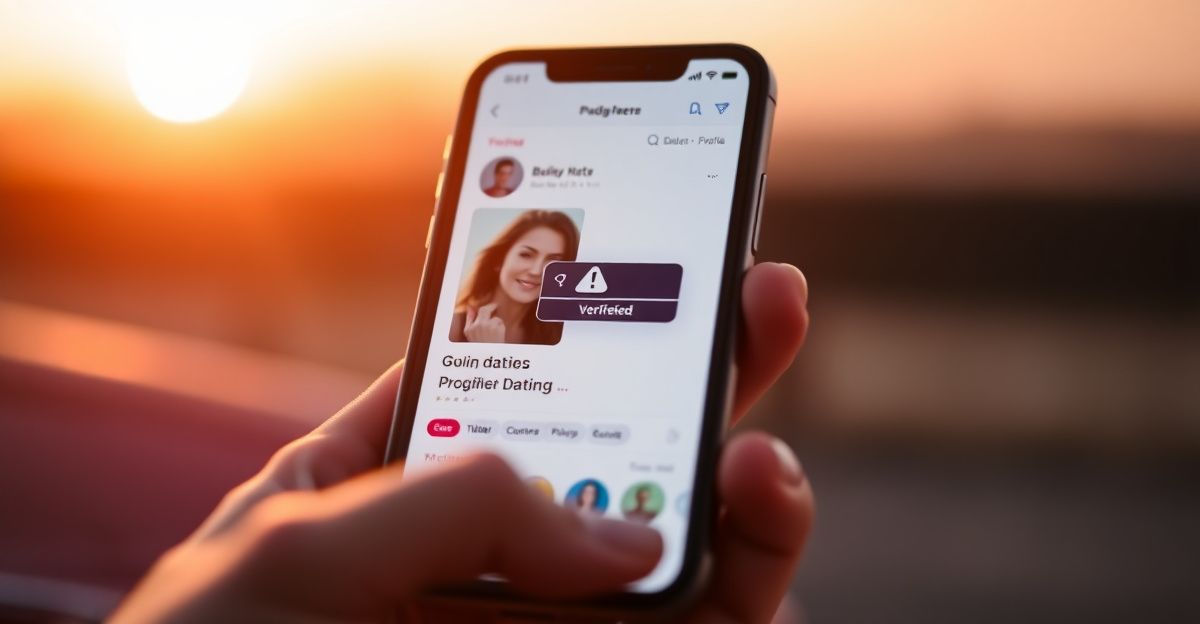
Pay close attention to the camera behaviour. Shagle is a video-first platform, so a user who refuses to turn on their webcam, keeps it suspiciously dark, or shows a suspiciously perfect loop of someone attractive should raise a flag. Human-operated fake profiles sometimes use pre-recorded footage, which you can test by asking them to wave or hold up three fingers. A bot or a recording cannot comply.
Profile images on account-based connections sometimes tell the story too. Images that look professionally lit, impossibly symmetrical, or oddly ageless are often lifted from stock photo libraries or social media. If you are curious, a reverse image search takes about thirty seconds and can confirm whether that face belongs to a model in São Paulo rather than someone in Sheffield.
Finally, watch the trajectory of the conversation. Genuine people ask questions back. They share small, real-world details - a noisy flatmate, a delayed train. Fake profiles tend to steer everything toward a single destination: a link, a payment, or a move to a private channel where Shagle's moderation no longer applies.
Protecting Yourself With Practical Boundaries
Setting clear personal rules before you open a chat is the most underrated safety tool available. I learned this the hard way after spending five months in a situationship in London, too nervous to say what I actually wanted. I kept rationalising and postponing, and it cost me sleep, time, and a fair amount of self-respect. What that period taught me is that a boundary is not a wall that keeps people out - it is a bridge that allows honest connection to actually happen. The same principle applies online. Decide in advance what you will and will not share: your last name, your workplace, your phone number. Hold that line from the first conversation, not the fifth.
On Shagle specifically, you can review the is Shagle safe guide on this site for a fuller picture of the platform's safety architecture. For now, the practical habits are straightforward. Never click a link sent by someone you have just met in a chat. Never move to a private messaging channel within the first few minutes of meeting someone. If a stranger asks for your phone number before you have had a genuine back-and-forth conversation, that is information worth noticing.
Shagle's VIP membership, currently priced at $39.95 per month, includes premium filters such as specific gender and location targeting. Using those filters thoughtfully can reduce random encounters with bot-heavy regions, though no filter is a complete solution. New users also receive 120 free credits when they sign up, which is a good opportunity to explore the platform's reporting tools before committing to anything financially.
How Shagle's Moderation Works and Where the Gaps Are
Shagle operates a live report system: a dedicated button appears during every active chat session. This is consistent with what the broader dating safety vertical describes as the baseline minimum - block and report tools, combined with moderation teams that review flagged content. The platform states that chats are not recorded, which is reassuring from a privacy standpoint, though it also means moderation relies heavily on user reports rather than retroactive review.
The gap is familiar to anyone who has spent time on random chat platforms. Bots and fake profiles are created faster than any moderation team can remove them. A bot account that gets reported and banned simply spawns a new session minutes later. This is not unique to Shagle - it is an industry-wide challenge documented across competitors including Chatroulette and Camsurf. The difference is in how quickly a platform responds to volume reports, and how actively it uses automated detection on suspicious connection patterns.
If you have already had a frustrating experience, the Shagle complaints page on this site explains how to escalate a report and what responses to expect. The more users report consistently, the better the moderation data becomes.
Comparing Shagle to Alternatives on the Bot Question
It is fair to ask whether other platforms handle this better. Chatroulette, one of Shagle's longest-standing competitors, has implemented a neural network-based nudity filter that also catches some bot-generated visual patterns. Coomeet, another alternative, uses a credit system that creates a small economic barrier to bot creation. Neither approach eliminates the problem, but both add friction that makes mass bot deployment less cost-effective.
Shagle's edge is its accessibility: no registration is required for basic use, and the gender filter is available without a subscription. That low barrier is exactly what attracts genuine casual users - and, unfortunately, also what keeps the door slightly ajar for bots. If the volume of fake encounters feels high during your sessions, try using the platform during peak European evening hours (roughly 7pm to 10pm GMT) when genuine human traffic is highest and bot-to-user ratios typically drop. You can also check out the full Shagle review on this site for a broader comparison of features and user experience.
For users who want a platform with a stricter identity layer, some people find that services requiring camera verification before matching offer a noticeably cleaner experience. Whether the trade-off in privacy and setup effort is worth it depends entirely on what you are looking for from the journey.
Staying Confident and Authentic Through the Noise
Encountering a bot or a fake profile can feel deflating, especially when you showed up with genuine openness. Try not to let it reshape your mindset toward suspicion as a default. The majority of people on random video chat platforms are real, curious humans who also want authentic connection. The fakes are loud but they are not the majority.
The most resilient approach is to treat each chat as a short, low-stakes experiment. You are not investing in someone until you have had enough real exchanges to feel the conversation has substance. Ask open questions that a script cannot easily answer: "What has surprised you most this week?" or "Tell me something you changed your mind about recently." These invite genuine reflection. A bot has no answer. A real person lights up.
Your confidence grows each time you trust your own observation. You spotted the scripted response. You noticed the camera never moved. You chose not to click the link. That is self-care in practice, and it is also the foundation of every healthy connection you will eventually build - on Shagle or anywhere else.
Comments
No comments yet.
Leave a comment
Your email will not be shown. Comments are reviewed before they appear.